Storytelling: The PM's Superpower
People don't remember slides; they remember stories. To lead without authority, you must be a master storyteller. A PRD is just a boring story. A vision deck is an exciting story.
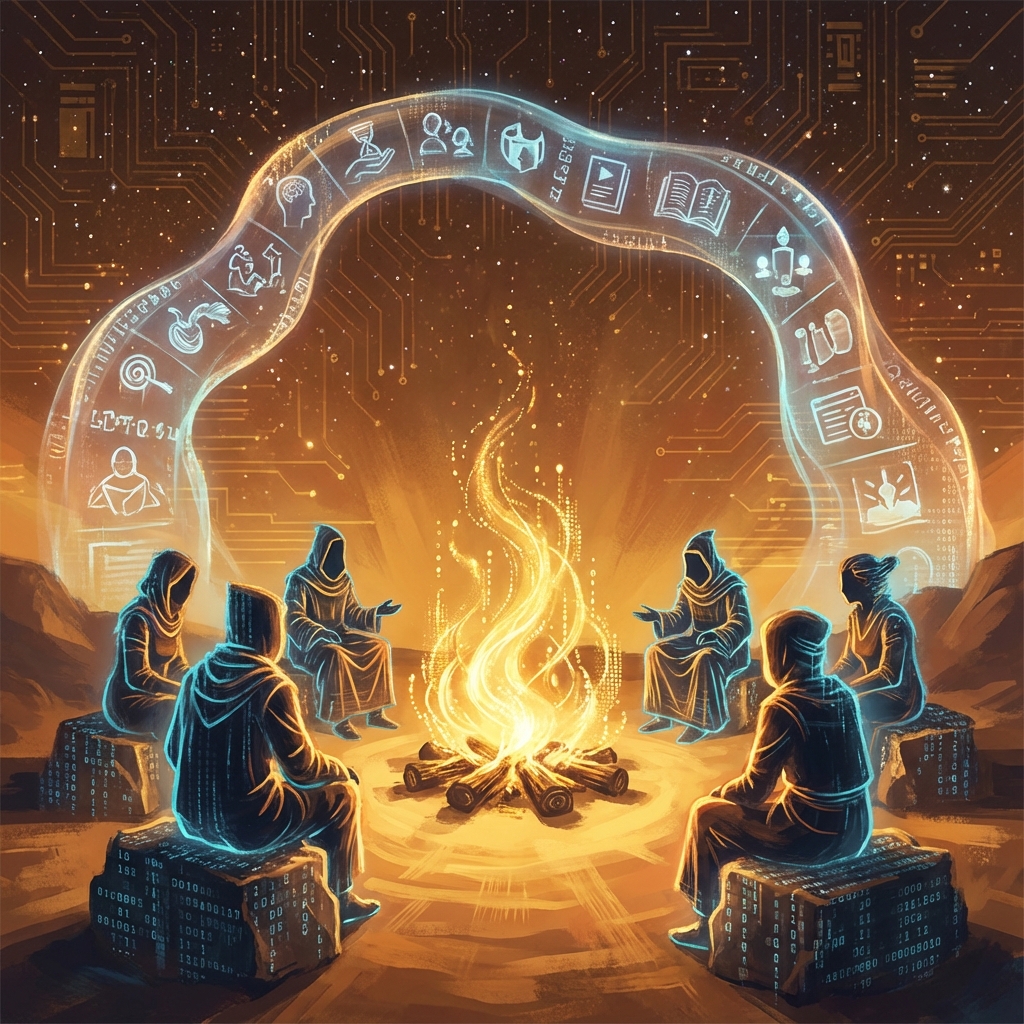
The Currency of Influence
As a Product Manager, you have no authority.You cannot order Engineering to code or Sales to sell.You can only influence them.
The most potent currency of influence is a compelling narrative.Humans are biologically wired to process stories, not bullet points.
The Narrative Arc
Every great product pitch follows a classic narrative structure, often called "The Freytag's Pyramid" adapted for tech:
- The Status Quo(The Setup): "Here is how users live today. It's okay, but not great."
- The Inciting Incident(The Problem): "But then, X changed. Or Y broke. Now the status quo is painful."
- The Rising Action(The Struggle): "Users try to solve this with spreadsheets/competitors, but it fails because..."
- The Climax(The Solution): "Enter our Product. It solves the pain by..."
- The Resolution(The Future): "Now, the user lives in a better world. Revenue is up, churn is down."
The Hero's Journey (Star Wars Framework)
A common mistake PMs make is making the product the hero.
Wrong: "Our AI algorithm is the hero because it processes 1M tokens/sec."
Right: "The User is the hero. They are overwhelmed by data. Our AI is the Magic Sword (or Obi - Wan) that empowers them to defeat the Villain(Chaos)."
Always frame the user as the protagonist.
Amazon's "Working Backwards"
Jeff Bezos institutionalized storytelling with the PR / FAQ .
Before writing code, you write the Press Release.
"Seattle, WA - Dec 10, 2024 - Today, Company X announced Feature Y, which allows users to..."
If the press release isn't exciting to read, the product isn't worth building.This forces you to focus on the Value Proposition rather than the Implementation Details.
Data vs.Story(Logic vs.Emotion)
Data builds trust.Stories build excitement.You need both.
The Sandwich Method:
1. Story: Open with a specific customer anecdote. "Meet Sarah. She spends 4 hours a week copying data from PDF to Excel." (Emotion)
2. Data: "There are 50,000 Sarahs in our userbase. That's 200,000 wasted hours." (Logic/Scale)
3. Story: "With our new PDF parser, Sarah finishes in 5 minutes. She gets to go home on time." (Vision)
Conclusion
Stop writing requirements.Start writing narratives.If you can't tell a story about why your feature matters, it probably doesn't.