Scaling Engineering Teams: From 5 to 50
Scaling an engineering team from 5 to 50 is not just about hiring more people; it's about rewriting the operating system of your organization. What works for a family-sized startup breaks at the village scale.
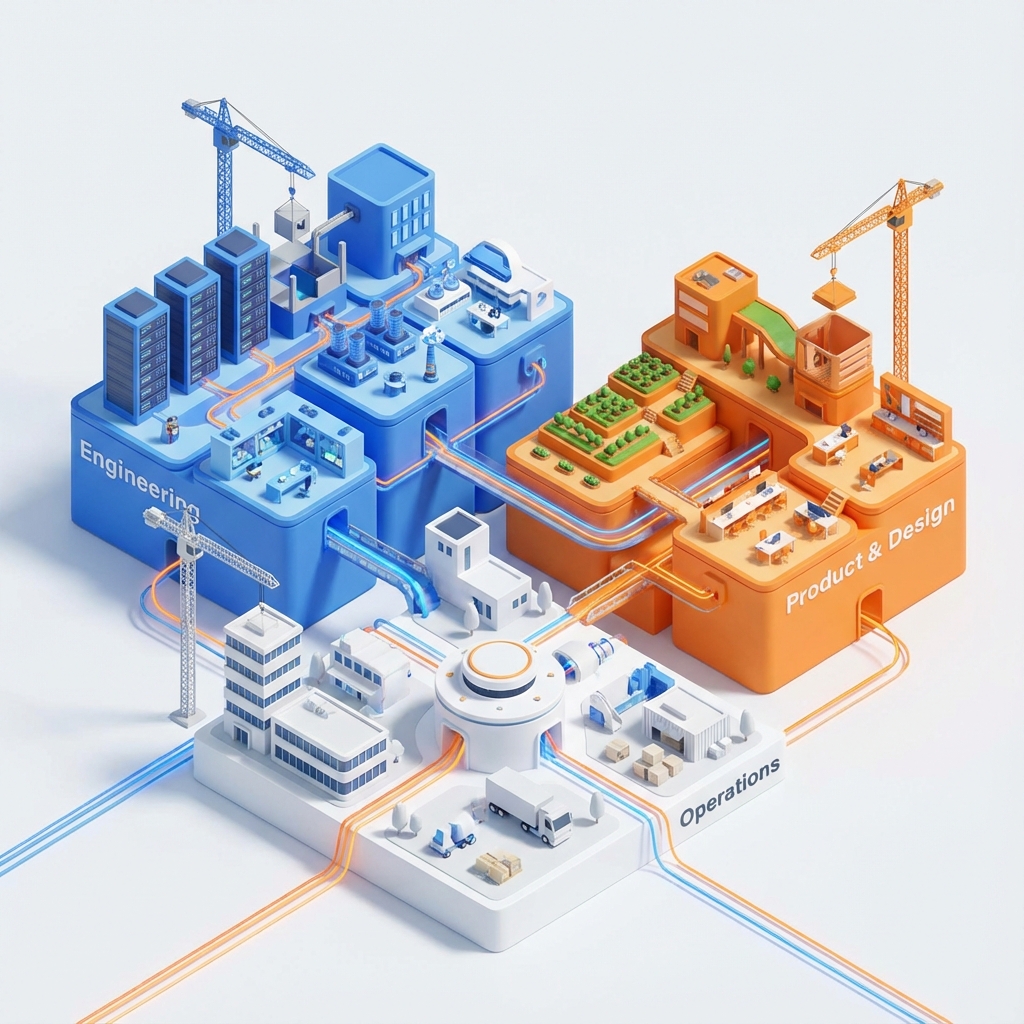
The "Family" to "Village" Transition
At 5 engineers, you communicate by osmosis. Everyone knows everything. Decisions are made over lunch. This is the "Family" stage.
At 50 engineers, osmosis fails. If you rely on "just talking to people," the loudest voices win, and context assumes a fully connected graph—which is mathematically impossible to maintain.
The Dunbar Number of Engineering
Dunbar's number suggests we can maintain ~150 stable relationships. In engineering, the effective number is much lower (approx. 15-20) for high-bandwidth technical context. You must introduce structure to artificially lower the cognitive load.
Evolution of Structure: The Squad Model
To maintain agility, we must decouple teams. The Spotify Squad Model (or variants of it) remains the gold standard for autonomy.
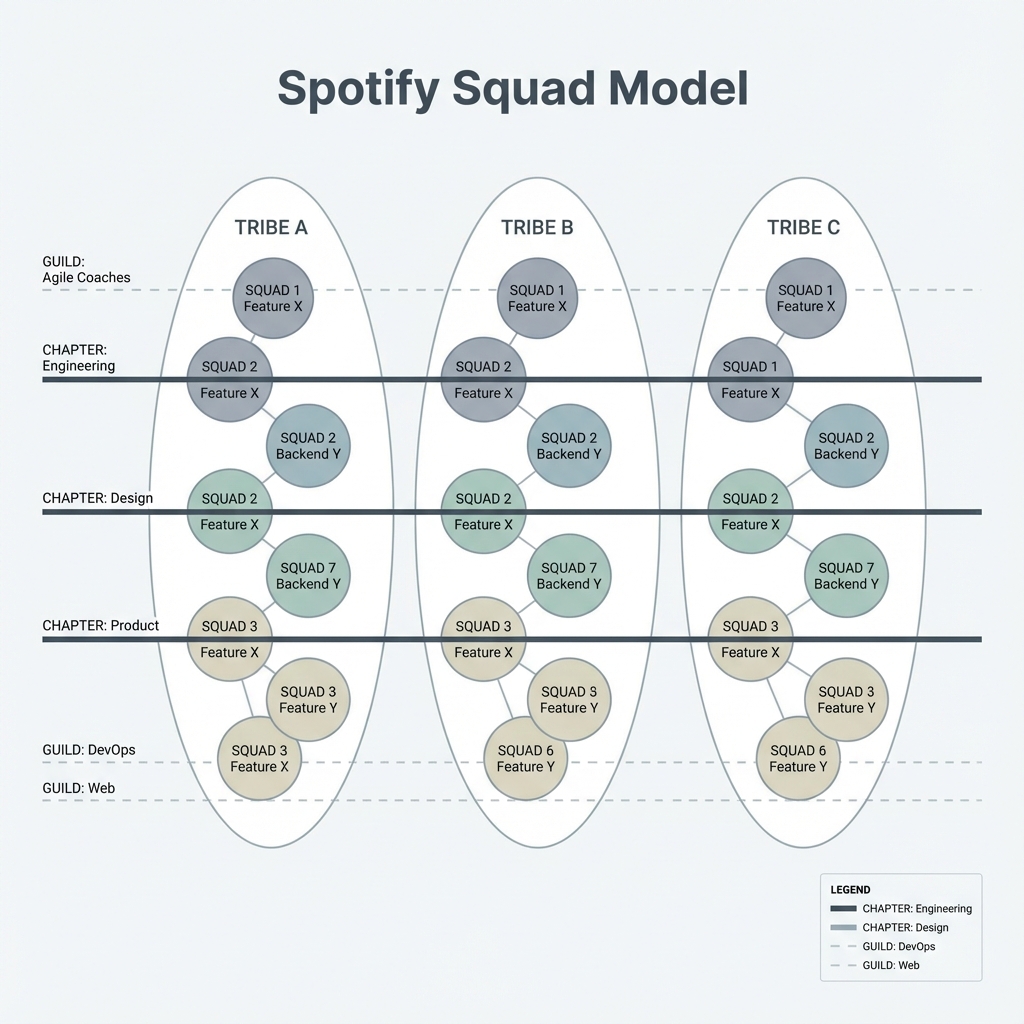
- Squads: Cross-functional teams (Product, Design, Eng) focused on a specific mission (e.g., "Checkout Flow"). They have all the skills needed to ship.
- Tribes: Collections of squads working in a related domain (e.g., "E-commerce Tribe").
- Chapters: Functional groups (e.g., "Frontend Chapter") to share best practices and ensure technical consistency across squads.
Hiring for the "Bar Raiser"
At 5 people, you hire for hustle. At 50, you need specialists and managers.
The most critical hire at this stage is the Engineering Manager (EM). Do not delay this. If your CTO is managing 20 people directly, they are burning out and becoming a bottleneck. An EM's job is not to code; it's to build the machine that builds the code.
Culture Fit vs. Culture Add: Stop looking for people who "fit" perfectly; look for people who add something missing. A diverse team outperforms a homogenous one every time.
Conclusion
Scaling is painful. You will have to fire your past self to hire your future self. Processes that felt bureaucratic at 10 people become essential lifelines at 50. Embrace the change.