The Rise of No-Code Tools
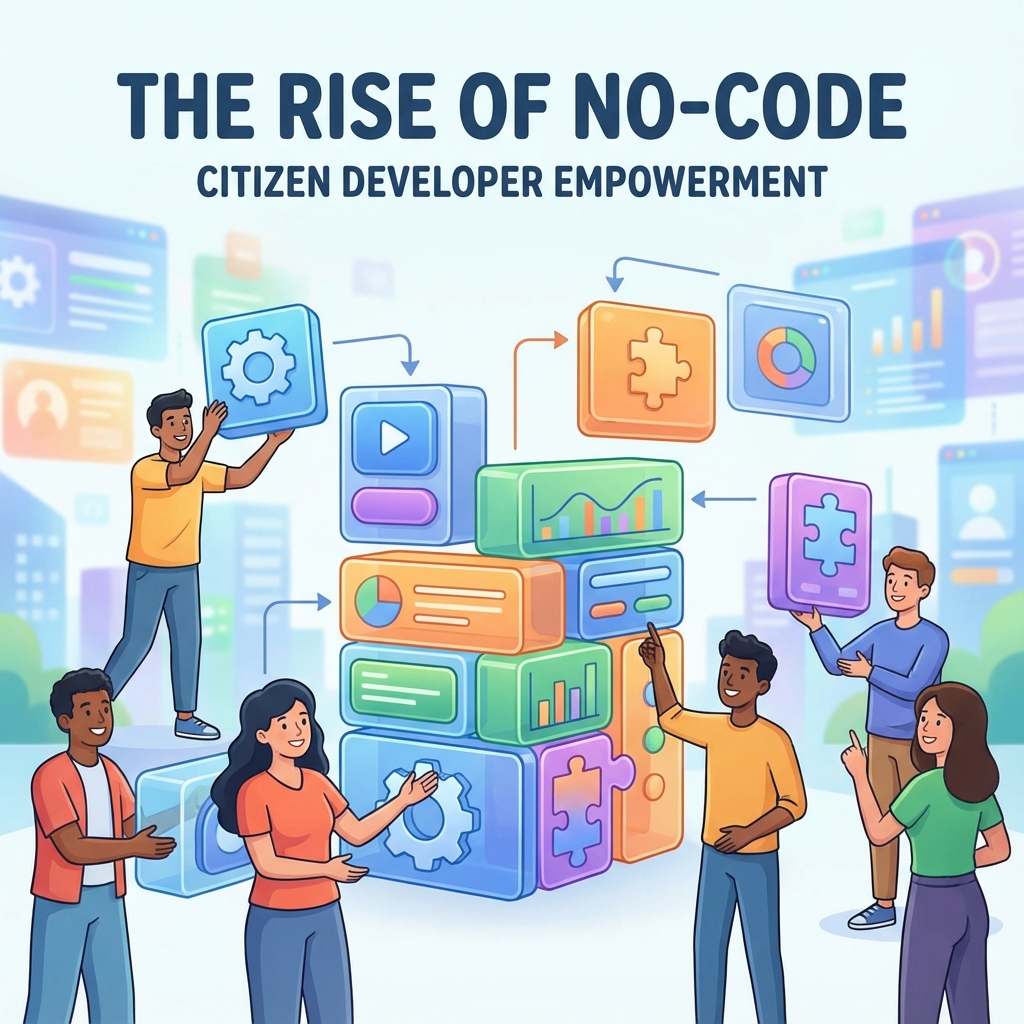
No - code is the democratization of software creation.It allows domain experts to solve their own problems without waiting for engineering bandwidth.Tools like Bubble, Webflow, and Zapier are creating a new class of "Citizen Developers".
The Third Abstraction Layer
Every decade, we add a layer of abstraction to software development:
- 1990s: C/C++ -> Java(Memory Management abstracted)
- 2000s: Java -> Python/Ruby(Compilation abstracted)
- 2010s: Servers -> Serverless (Infrastructure abstracted)
- 2020s: Code -> No-Code (Syntax abstracted)
No - code isn't "fake" coding. It's visual coding.It replaces the IDE with a GUI, but the logic—loops, conditionals, database relationships—remains the same.
The Stack: Then and Now
A typical MVP stack used to be:
- Frontend: React/Vue
- Backend: Node/Python
- Database: PostgreSQL
- Auth: JWTs + Bcrypt
Now, a "Citizen Developer" builds the same functionality with:
- Frontend: Webflow (for marketing) / Bubble(for app logic)
- Backend: Zapier / Make(logic glue)
- Database: Airtable / Xano
- Auth: Memberstack
This shift reduces the "Time to 'Hello World'" from days to minutes.
Validation Speed vs.Technical Dept
For founders, no - code is a cheat code.You can validate a market hypothesis in a weekend instead of a month.If no one wants your Airtable + Softr app, they probably won't want your React app either. The biggest risk for early-stage startups is Market Risk, not Technical Risk.
However, No - Code introduces a new kind of debt: Platform Risk . If Bubble raises its prices or goes out of business, you are dead. If you hit a performance ceiling in Airtable (50k records), you are stuck.
The Graduation Problem
The hardest phase for a No - Code startup is "Graduation." You reach 1,000 users.The app becomes slow.You want a feature that Bubble doesn't support. You need to migrate to code.
This migration is often valid, but painful.Data migration from schemaless No - Code DBs to SQL is nightmare fuel.The logic buried in 500 Zapier zaps needs to be documented and rewritten.
Recommendation: Treat No-Code as a disposable prototype that actually works.Plan to throw it away.If you succeed enough to need a rewrite, that's a good problem to have.
Automation in the Enterprise
The real sleeping giant of No - Code isn't startups; it's internal tools(Retool) and workflow automation(UiPath, Make).Marketing ops, Sales ops, and HR teams are building complex automation pipelines without ever talking to Engineering.This "Shadow IT" is scary for CIOs but liberating for operations.
Conclusion
Developers shouldn't fear No-Code. We should embrace it. It takes the boring CRUD apps off our plate so we can focus on complex algorithms and system architecture. The future is hybrid: No-Code for the 80% standard use cases, and Code for the 20% innovation.