The Ethics of AI Product Design
We are building species-level intelligence. That sounds hyperbolic, but it is the reality. As product builders, every decision we make—from the training data we select to the safety filters we configure—has downstream consequences that can affect millions.

The "Black Box" Problem
The fundamental ethical challenge of modern Deep Learning is opacity. We know the input and the output, but the internal state is often a mystery even to the creators. This creates a "Responsibility Gap".
If an autonomous medical diagnosis AI makes a mistake that harms a patient, who is liable? The doctor? The developer? The model provider?
Mitigation Strategy: Interpretability
Product teams must insist on interpretability tools. Techniques like SHAP (SHapley Additive exPlanations) values can help explain why a model made a specific prediction, moving us from "Trust me, I'm an AI" to "Here is my reasoning."
Bias Amplification Loops
AI is a mirror of humanity, reflecting our best traits and our worst prejudices. If you train a hiring model on historical data, it will learn to discriminate against underrepresented groups because history was discriminatory. But AI doesn't just reflect bias; it amplifies it.
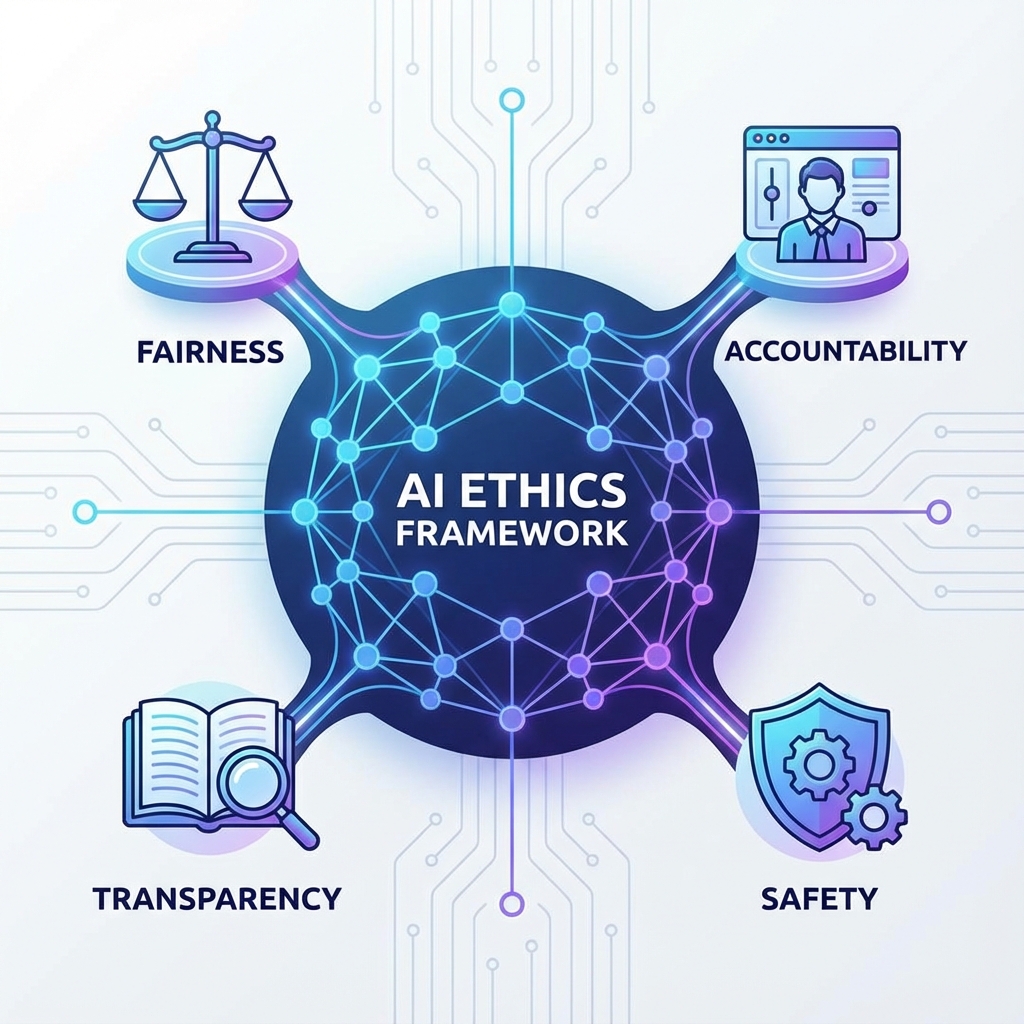
The AI Product Checklist
Before shipping any AI feature, ask these questions:
- Data Provenance: Do we have the rights to use this data? Was it collected with consent?
- Disparate Impact Testing: Does the model perform equally well across different demographic groups?
- Feedback Loops: Are users able to correct the AI? Does that feedback retrain the model?
- Fallbacks: What happens when the model hallucinates or fails? Is there a human-in-the-loop?
The Alignment Problem
How do we ensure that an AI's goals align with human welfare? It's not just about stopping "Skynet"; it's about preventing "paperclip maximizers"—AI that destroys value while blindly pursuing a poorly defined metric (e.g., maximizing engagement at the cost of mental health).
As PMs, we define the reward functions. If we optimize solely for "time spent," we are complicit in addiction algorithms. We must define Holistic Success Metrics that include user well-being.
Conclusion
Ethics is not a constraint; it is a feature. In a world of deepfakes and misinformation, Trust will be the most valuable currency. Building ethical AI is the only way to play the long game.